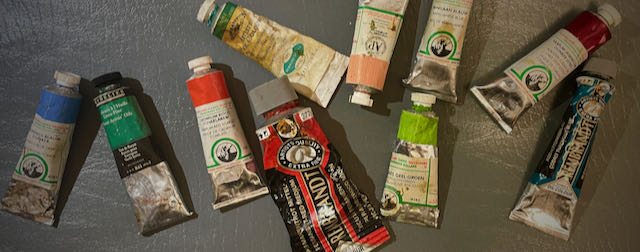
Oil Painting at Glance
The history of paints made from vegetable drying oils dates back to the Middle Ages. Oil paint became widely used in the fifteenth century and matured by the sixteenth century. It remains the standard method for artists’ easel painting.
Artists value oil painting for its flexibility, visual richness, and ability to combine transparent and opaque layers, as well as glaze techniques.
Advantages of Oil Painting
Flexible manipulation and broad artistic possibilities.
Combine glaze and body color in one work.
Colors remain stable upon drying.
Suitable for large works on lightweight canvases.
Professional-grade supplies are widely available.
Paint
Paint consists of finely divided pigments dispersed in a liquid medium. Drying oil serves multiple roles in oil paint:
Executive: Allows colors to be applied and blended.
Binding: Locks pigments into a durable film.
Adhesive: Bonds the paint to the canvas.
Optical: Enhances depth, tone, and richness.
Drying Oils
Drying oils form tough films through oxidation rather than evaporation. Oxygen absorption triggers chemical reactions, creating a solid material that cannot revert to liquid.
These processes increase weight and produce minor by-products, which are measurable and studied for art conservation.
LINSEED OIL
Linseed oil is pressed from the ripe seeds of the flax plant (Linum usitatis-simum, which is grown in all temperate or cold climates. The seed from each fax growing region has its own characteristics and is rated in quality accordingly. The impurity that is principally responsible for variations in quality is
Sometimes foreign seeds are added deliberately.
foreign seed or weed seed. This is true of any commercial vegetable oil.
The production of linseed oil is a highly developed modern industry in which considerable scientific work is constantly being done to promote eco. nomic efficiency and the uniform production of oils that will have the best properties for the various uses to which they are applied. Because of the relative insignificance of the quantities that are used for artists' materials, scarcely any of the results of this research work are directly applicable to our
purposes.
The seed is crushed and the oil is extracted from it by pressing it in an expeller. The use of extreme pressure and heat is necessary to secure the most economical results, but the quality of the oil thus produced is very definitely interior to that extracted by cold pressing with less pressure, especially from the artist's viewpoint. The removal of any remaining oil in the seeds after hot pressing is accomplished through the use of solvents. Most of the solvent is evaporated and this remaining oil is then combined with the hot-pressed oil. This crude oil mixture is then refined accordingly. This process extracts a much larger percentage of substances from the seed; and despite any subsequent refining to which the oil is subjected, the oil's resistance to embrittlement on aging, as compared to cold-pressed oil, is definitely reduced From their introduction in the 1800s to the 1930s, the hot-pressed oils have always been considered inferior to cold-pressed oil and were never used in the best artists colors. However, this is the only method presently used for linseed oil extraction in the United States. Because there is no longer any sufficiently large-scale commercial demand for it, cold-pressed linseed oil was rarely available until recently, and the oil producers have supplied artists material manufacturers with the best grades of pale, alkali-refined oil as substitutes, claiming that they are superior in uniformity and all-around properties to the cold-pressed oil. On the other hand, some artists, notably in England, have claimed that modern oil colors are vastly inferior to the older colors that were made with cold-pressed oil, not only in resistance to embrittlement but also in plastic flow and other working qualities, including their pronounced "suede effect"—that is, a definite difference in color between vertical and horizontal brushstrokes on an area of flat color, a property that is also called dichroism. Made All cold-pressed linseed oil now comes from Europe, particularly the Netherlands, Belgium, and Germany.
We can expect this controversy to be resolved in the near future. Oil paint made with cold pressed linseed oil is now available in art supplies stores.
Gallery: More Examples
Frequently Asked Questions
What is your favorite medium for oil painting?
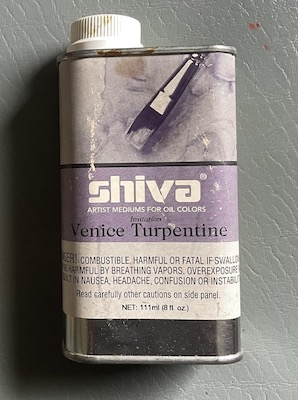
I prefer using turpentine combined with cold-pressed linseed oil. This traditional medium provides good paint flow, rich color, and controlled drying time.
What do you consider a good canvas for portrait painting?
A high-quality oil-primed canvas, such as the Scarlet Ochre oil ground by Fredrix, works very well. Hand-stretched canvas or linen is also an excellent choice for portraits.
What brushes are best for beginners in oil painting?
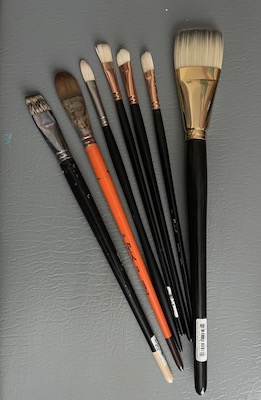
Beginners should start with synthetic or hog bristle brushes. Flat and filbert shapes are the most versatile and help build confidence without over-detailing.
Do I need expensive paints to start oil painting?
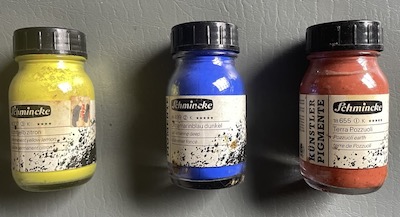
You do not need the most expensive paints to begin. Artist-grade paints are preferred, but a limited palette of quality colors is more important than having many tubes.
Is canvas or linen better for oil painting?
Canvas is affordable and suitable for beginners, while linen is more durable and refined, making it a favorite among professional artists. Both must be properly primed.
How long does oil paint take to dry?
Oil paint dries slowly. Thin layers may dry within a few days, while thicker areas can take weeks. Complete curing may take several months.
Can I paint directly from the tube without medium?
Yes, oil paint can be used directly from the tube, especially for early layers or impasto work. Mediums are optional and mainly used to adjust flow and transparency.
Is oil painting suitable for beginners?
Yes, oil painting is excellent for beginners because of its long working time, which allows for blending, corrections, and a relaxed painting process.